It started with an A1 Mini.
I did not need a workshop full of kit. I needed something small that just printed - benchies, brackets, the odd replacement clip that would otherwise mean waiting on a parcel. The Mini was perfect for that. Quiet enough to live near a desk, quick enough that “I wonder if I can print this” turned into a finished part the same evening.
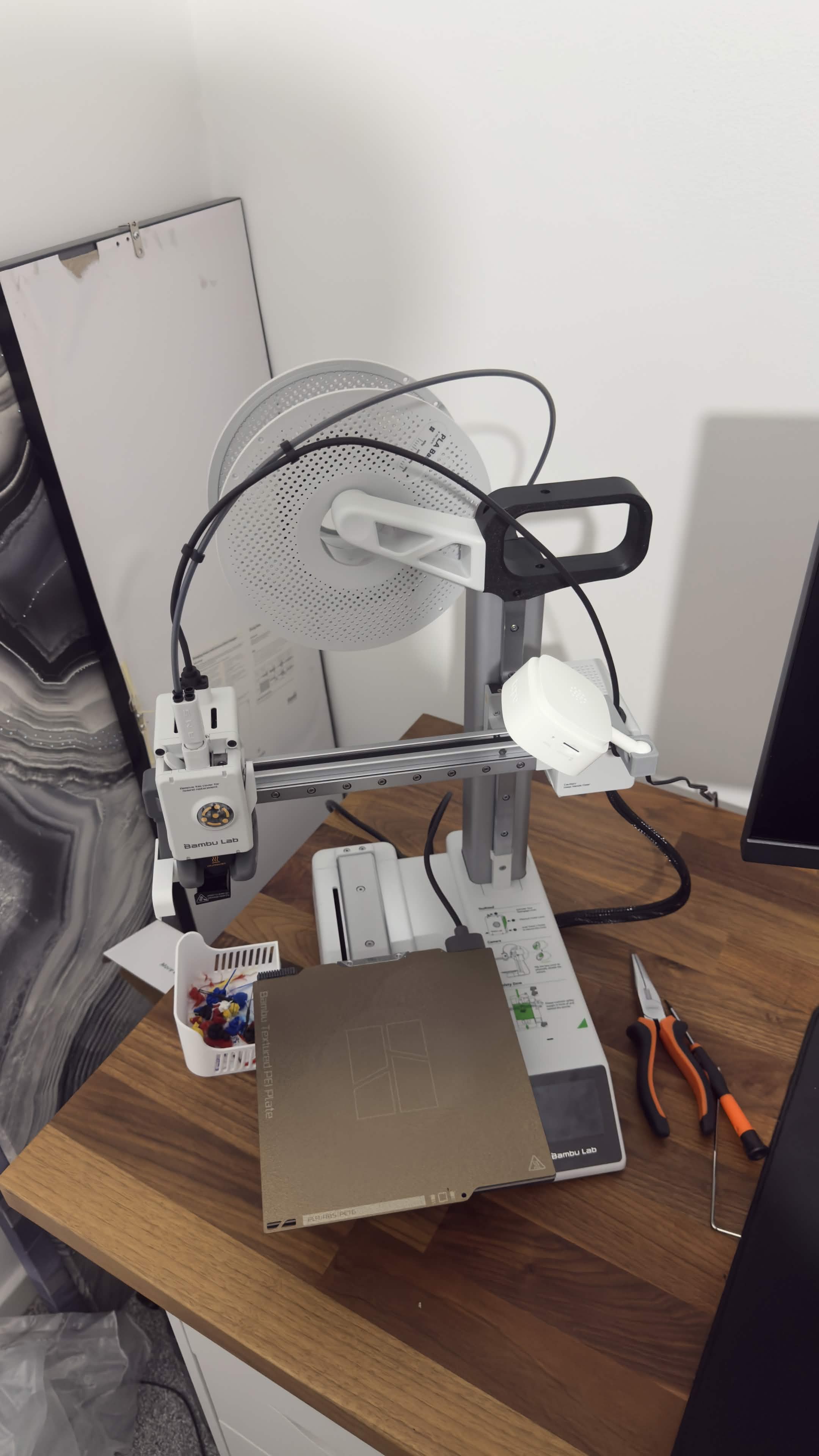
Then the colours arrived
The limit showed up the usual way. One colour is fine until it is not. Multi-colour prints, swaps mid-plate, less babysitting of spools - that is when the A1 with AMS made sense. Suddenly print by object, filament changes, and not throwing away half a roll of “poop” on every colour job became part of the workflow rather than a special occasion.
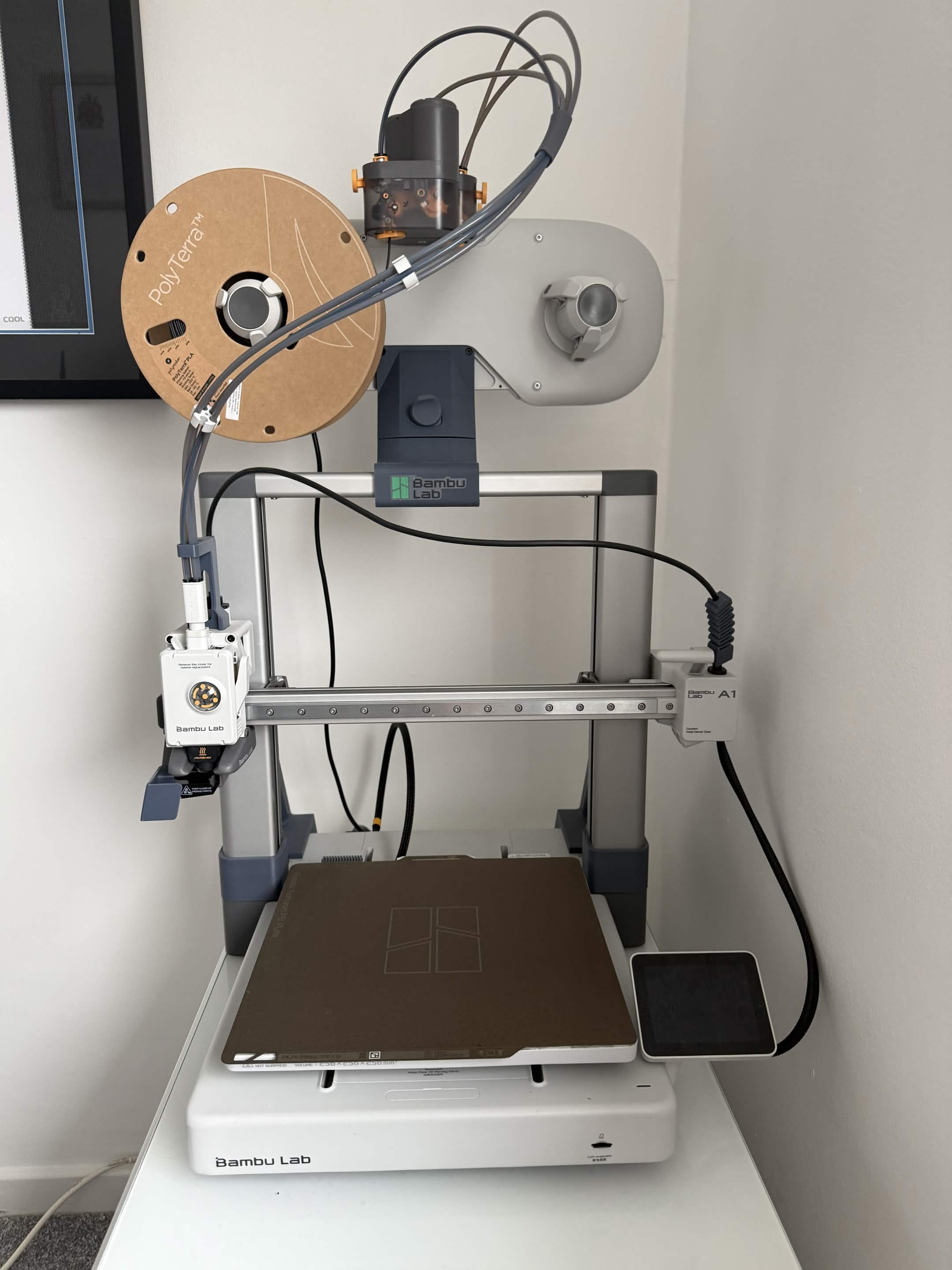
The A1 era is also when the 3D printing docs started filling up for real - bed levelling habits, plate cleaning, seams, ironing, which filament brands behaved, and how not to ruin a job by swapping a “same colour” roll that was not quite the same. The printer was doing the easy bit. The fiddly bit was everything around it.
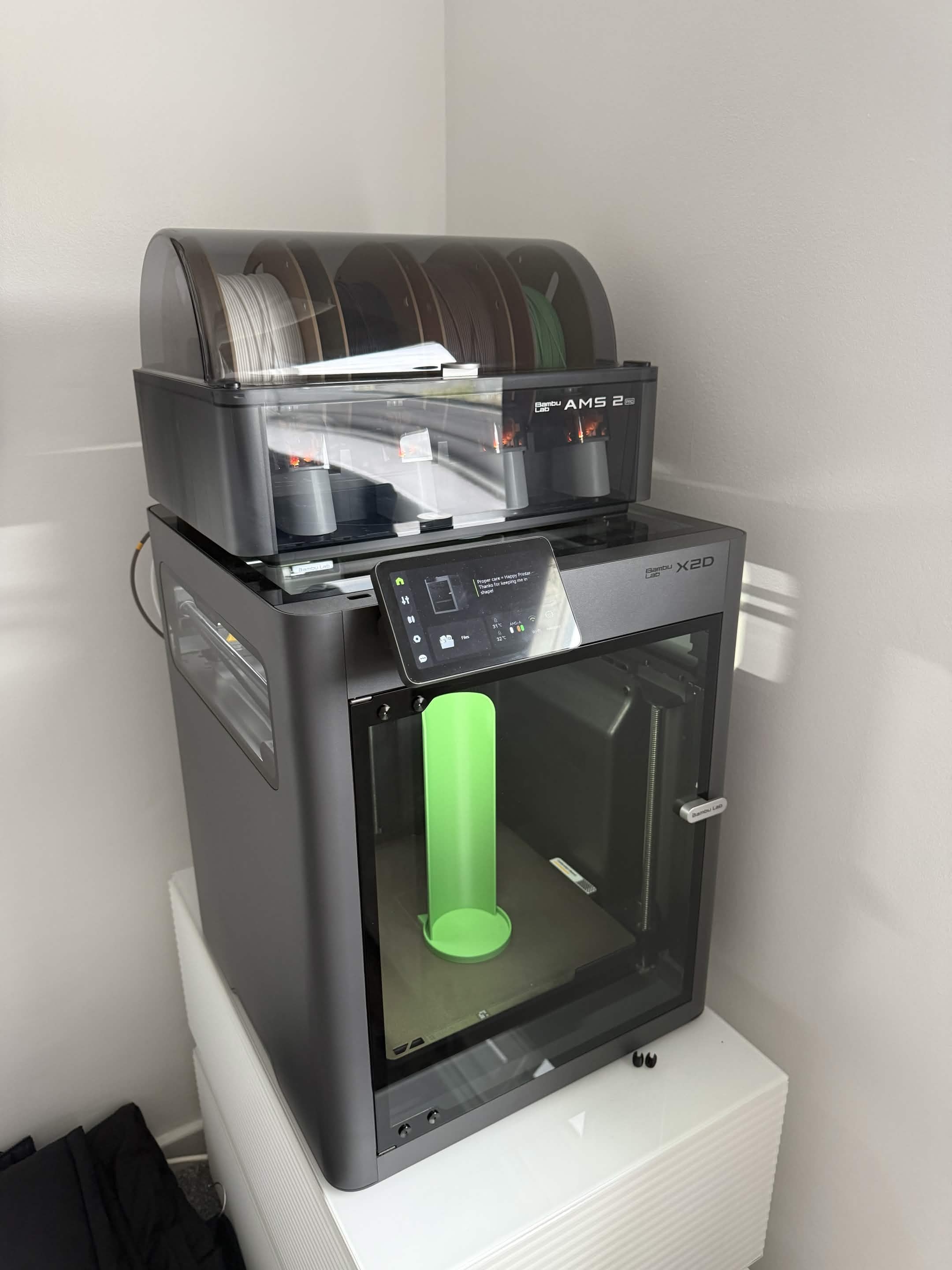
The X2D
Then the upgrade itch won again. The X2D is where I am now - more machine than the Mini ever pretended to be, and enough headroom that I am no longer negotiating with the printer about every ambitious plate. It feels less like “can this do it?” and more like “how do I set this up properly?”
Designing, not just downloading
For a long time the pipeline was simple: find a model, slice it in Bambu Studio, print it. Lately I have started learning Autodesk Fusion properly - still early days, but enough to stop treating every idea as something that has to exist on MakerWorld first. Designing in Fusion (alongside MakerLab or Tinkercad when I want something quicker) is the bit that makes the printer feel like a tool again, not just a very clever vending machine for other people’s STLs.
Where that leaves things
Mini for the spark, A1 + AMS for colour and habit, X2D for the “right, we are doing this properly” phase, and Fusion so the next bracket is mine. The docs catch the slicer settings and troubleshooting. This is just the path between the machines.
I still it as a hobby. It blows my mind that I can sketch an idea or find one, and a few hours later hold a real object that did not exist that morning. Hooks, covers, jigs, replacements for the thing that snapped, little fixes that would otherwise mean waiting on a parcel or living with the broken bit. It feels like spawning unlimited useful items out of plastic and patience, and I am not tired of that yet.